 blog
blogAncient Egyptian Symbol Guide for Travelers: Understand What You’ll See
Step onto a Nile cruise, enter a temple hall, or glance at a tomb wall—and suddenly you’re surrounded by ancient Egyptian symbols that feel like a language. For travelers, the best part isn’t just “seeing” Egypt; it’s recognizing what you’re looking at. With the right guide, hieroglyphs, gods, animals, colors, and protective emblems stop being background decoration and start telling you stories about religion, royalty, and daily life.
This guide is designed for on-the-ground travelers: you’ll learn what the most common ancient Egyptian symbol motifs mean, how to spot them quickly, and how to connect the visuals to the sites you’re visiting—especially during a relaxing, culture-rich cruise like A Nile Cruise That’s Built for Comfort, Culture & Value.
Why Ancient Egyptian Symbols Still Feel Powerful Today
Ancient Egypt used symbols to communicate on multiple levels. Some were literal (names, places, titles). Others worked as a “visual theology,” linking people to the gods, to the afterlife, and to the cosmos. That’s why temples and tombs often feel dense with imagery: every carved figure and emblem had a purpose.
On a trip, you’ll notice a pattern: symbols often cluster around royal authority, divine protection, and eternal life. If you know the basics, your experience becomes more vivid—and far more memorable.
Start With the Big Picture: Religion and the Afterlife
Most travelers first connect with Egypt through the gods, but the real “center” of the symbolism is the afterlife. Tomb art and temple imagery were meant to ensure continuity—spirit, breath, memory, and order.
If you want a deeper look at iconic temple imagery, explore Ancient Egypt Religion Symbols: The Meaning Behind the Most Iconic Temple Imagery. Understanding these foundations makes nearly every other symbol easier to read.
Key Theme: Ma’at (Order)
When you see references to justice, balance, or truth, you’re often encountering the idea of Ma’at. It represents cosmic order, and it’s a major reason Egyptian art feels both symbolic and intentional. Even when you’re looking at protective charms or royal crowns, you’re often seeing the language of “right order.”
Common Ancient Egyptian Symbol Meanings You’ll See on Site
Here are some of the most recognizable ancient Egyptian symbol elements that appear across temples and tombs. Use them like a quick visual checklist as you explore.
1) The Eye (Often the Eye of Horus or the Eye of Ra)
You may notice an eye-shaped motif—sometimes with distinct markings. This symbol is strongly associated with protection and restoration, linked to divine power and healing. It’s a reminder that Egyptian religious imagery wasn’t just decorative; it was meant to safeguard.
2) The Ankh (The Key of Life)
The ankh looks like a cross with a looped top. It’s one of the most famous symbols travelers recognize because it signals life, vitality, and often divine life granted by the gods.
3) Scarab Beetles
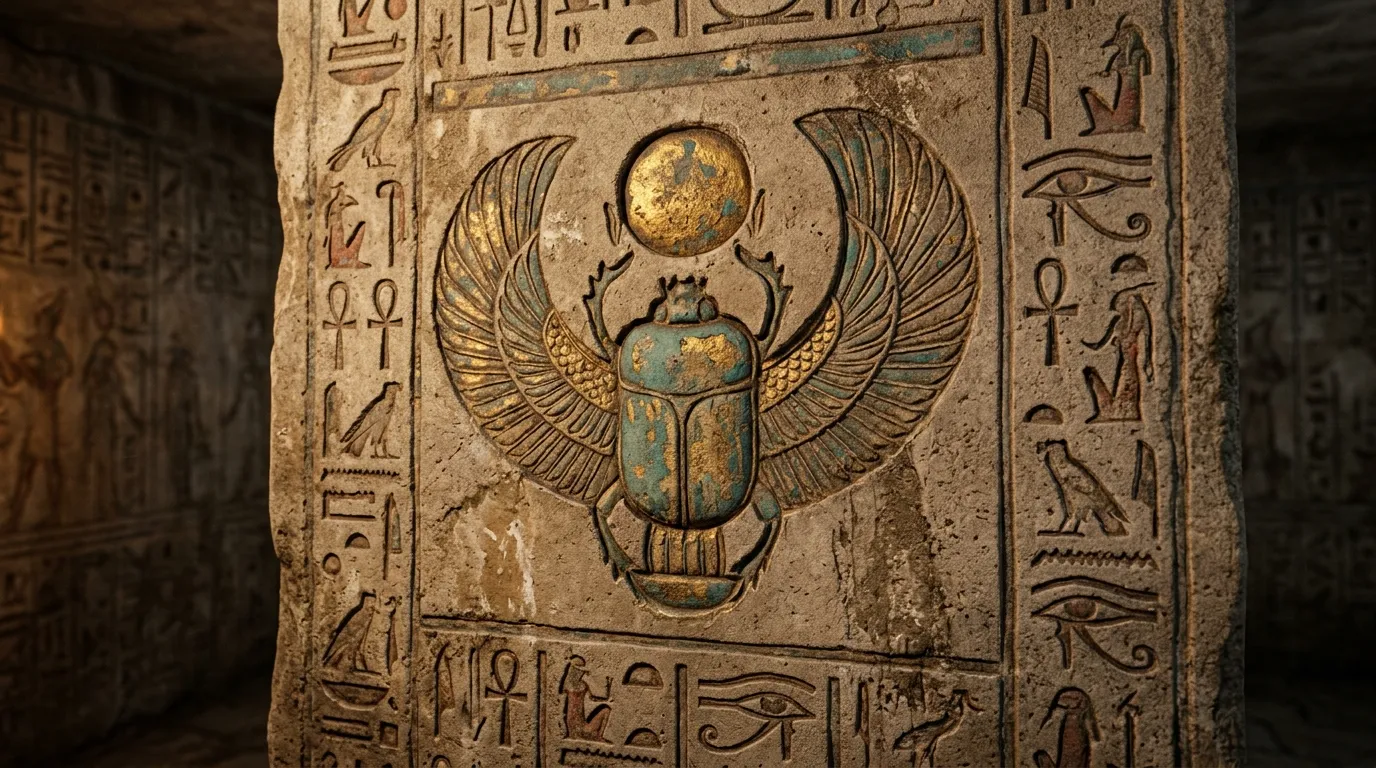
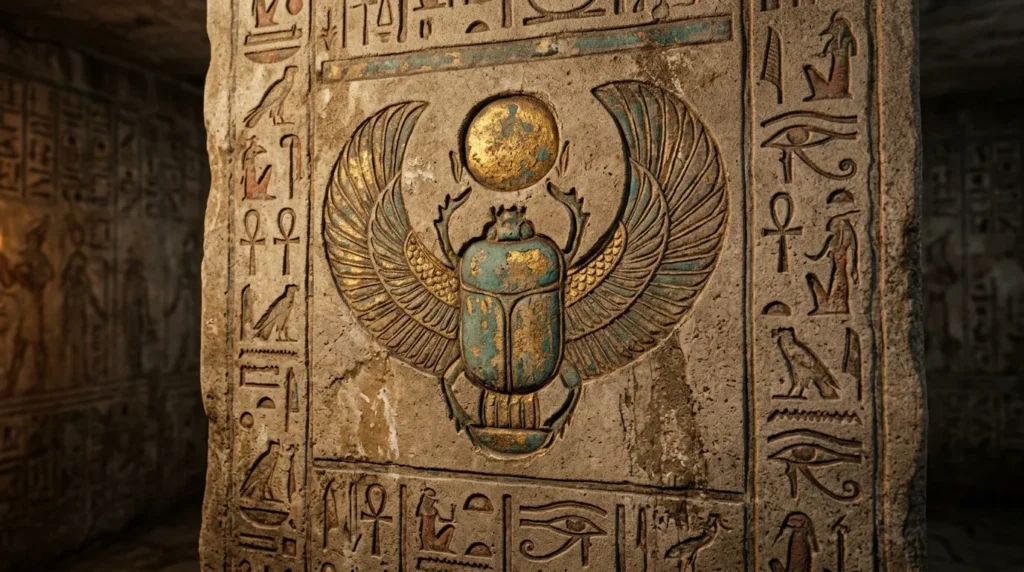
Scarabs symbolize rebirth and transformation. If you see a beetle-like figure, it’s often tied to the cycle of renewal—especially relevant to tomb contexts, where eternal life was a core focus.
4) The Lotus and Papyrus
The lotus is commonly associated with renewal and emergence. Papyrus is tied to Lower Egypt and the idea of growth and order. Together, they reflect how nature imagery blended with political and spiritual meaning.
5) Animals as Gods and Guardians
Egyptian symbolism uses animals in powerful ways. A hawk can signal royal and divine authority; a jackal often relates to funerary and protective roles. When you see animal-headed figures, you’re not just seeing “a character”—you’re seeing a condensed theology.
6) Crowns and Headpieces
Don’t overlook clothing and headgear. Colors and crown styles can indicate territory, authority, and divine connection. In temple scenes, the right headpiece often tells you who is being honored and under what cosmic legitimacy.
How to Decode What You See: A Traveler’s On-Site Method
You don’t need to memorize hieroglyphs. Use a simple approach:
- Look for the “cluster”: Symbols usually appear around key figures (gods, rulers) or near important spaces (doorways, walls, burial chambers).
- Identify the “purpose”: Is the scene protective, celebratory, funerary, or cosmic? Your answer guides your interpretation.
- Notice repetition: If the same emblem appears again and again, it likely represents a central belief (life, protection, renewal, order).
- Connect it to the location: Temples often emphasize worship and divine interaction; tombs emphasize continuity and the afterlife.
Turn Symbols Into Stories on Your Nile Cruise
The easiest way to absorb ancient Egyptian symbolism is to experience it in context—slowly, with time to reflect, and with knowledgeable guidance. A cruise naturally supports this because you move between sites without rushing.
If you’re choosing your itinerary, consider the value and comfort of A Nile Cruise That’s Built for Comfort, Culture & Value, which helps you focus on the experience rather than logistics. For travelers planning around departure points, read Are There Nile Cruise Packages from Luxor? Get the Best Deals (and What’s Included) so you can compare what’s included and plan a smoother route.
Intimate, Immersive Options
If your priority is a calmer feel—more time for photos, fewer crowds, and a more personal atmosphere—an Assouan Dahabiya Nile Cruise is a classic choice. Check out Assouan Dahabiya Nile Cruise: The Intimate Way to See Egypt in Style and learn how boat style can shape your pace.
To pick the best match for your preferences, visit Assouan Dahabiya: Choose the Right Boat for Your Perfect Nile Escape. Want something premium and relaxed? Explore Amoura Dahabiya Nile Cruise: A Premium, Laid-Back Experience on the Water. Couples and families can also thrive on smoother schedules—see A Sara Nile Cruise: Why Couples & Families Love This Smooth Nile Experience and A Sarah Nile Cruise: Your Effortless Egypt Journey (Tours, Transfers & Timing) for practical travel comfort.
Bring It All Together: Temple & Tomb Highlights
One of the biggest “aha” moments comes when you connect symbol meaning to the actual space you’re standing in. To help you decode what’s happening visually during your visits, use this companion resource: Ancient Egypt Signs: Decode Temple & Tomb Highlights on Your Nile Cruise. It’s a traveler-friendly way to turn carvings into understanding—so you can walk through each site feeling confident instead of overwhelmed.
Final Thought: Your Egypt Becomes Personal
Once you start recognizing the ancient Egyptian symbol patterns—life and rebirth, protection and order, divine authority and cosmic balance—Egypt changes from a “bucket list” destination into a place you can actually read. Every doorway, wall scene, and carved emblem becomes part of a larger story.
Ready to experience it at a comfortable pace? Choose a cruise that supports culture, timing, and thoughtful exploration—then use this guide as your field decoder for what you’ll see next.


