 blog
blogMaster transportation in Egypt for 2026. Compare domestic flights, the new Cairo Monorail, sleeper trains, and private cars for a seamless, worry-free journey.
Navigating the landscape of transportation in Egypt has undergone a radical transformation as of early 2026. What was once a system defined by charming chaos has been replaced by a multi-billion dollar infrastructure overhaul. With the launch of the Cairo Monorail in January 2026 and the final countdown to the High-Speed Rail’s debut, moving between ancient temples and modern Mediterranean hubs is now faster and more efficient than ever before. Whether you are zipping through Cairo’s traffic in an Uber or flying over the desert to the Red Sea, understanding your options is the key to a stress-free Egyptian adventure.
As an expert who has watched the “New Republic” transit plan come to life, I can tell you that the secret to 2026 travel is the “Hybrid Approach.” Don’t rely on just one mode of transport; instead, match the vehicle to the distance and the district to maximize your time at the monuments.
1. Domestic Flights: The Fast-Track Option
For long-distance hops between Cairo, Luxor, Aswan, and the Red Sea, domestic flights remain the undisputed king of convenience. In 2026, the domestic network is more robust than ever, with low-cost carriers providing stiff competition to the national flag carrier.
- Main Hubs: Cairo (CAI), Hurghada (HRG), Sharm El Sheikh (SSH), Luxor (LXR), and Aswan (ASW).
- Airlines to Watch: EgyptAir (full service), Air Cairo, and Nile Air (budget-friendly).
- 2026 Pricing: Expect to pay between $60 and $150 USD for a one-way ticket when booked 3-4 weeks in advance.
- Pro Tip: A flight from Cairo to Luxor takes just 60 minutes, compared to a 10-hour train ride or a 7-hour drive.
2. The New Era: Monorail and High-Speed Rail
2026 marks the year that Egypt officially entered the “Future of Rail.”
The Cairo Monorail
Launched in January 2026, the two-line monorail system has revolutionized urban mobility.
- East Nile Line: Connects Nasr City to the New Administrative Capital (54 km).
- West Nile Line: Connects 6th of October City to Giza (42 km), providing a direct, elevated link to the Giza Plateau and the GEM.
- The Experience: Fully automated, driverless trains with panoramic windows—perfect for seeing the city without the smog.
High-Speed Rail (The Green Line)
While parts are still in trial phases, the first segment of the “Suez Canal on Rails” is set to connect Ain Sokhna on the Red Sea to Alexandria and Matrouh on the Mediterranean by June 2026.
- Why it matters: It will cut travel time from the Red Sea to the Mediterranean down to under 4 hours.
3. Train Travel: The Classic Nile Valley Route
For many, transportation in Egypt isn’t complete without a rail journey through the lush Nile Delta.
- The Sleeper Train (Abela Egypt): Still the most popular choice for tourists traveling from Cairo to Luxor/Aswan.
- 2026 Foreigner Rates: Approx. $105 for a double cabin and $140 for a private single cabin.
- VIP Seated Trains: A more budget-friendly daytime option. First-class seated tickets for foreigners start around $60-$75.
- Booking Advice: Always use the official ENR website or the Abela Egypt portal. Avoid unofficial street agents.
Comparison: Transportation in Egypt 2026
| Mode | Route Example | Time | Approx. Cost (USD) | Best For |
| Domestic Flight | Cairo to Aswan | 1h 20m | $80 – $160 | Speed / Comfort |
| Sleeper Train | Cairo to Luxor | 10h | $105 – $140 | Overnight Travel |
| Private Car | Luxor to Hurghada | 4h | $90 – $130 | Flexibility |
| Monorail | Giza to New Capital | 60m | $1 – $3 | Urban Commutes |
| Uber / Careem | Within Cairo | 30-60m | $4 – $10 | City Errands |
4. Ride-Hailing & Private Cars: Your Daily Workhorses
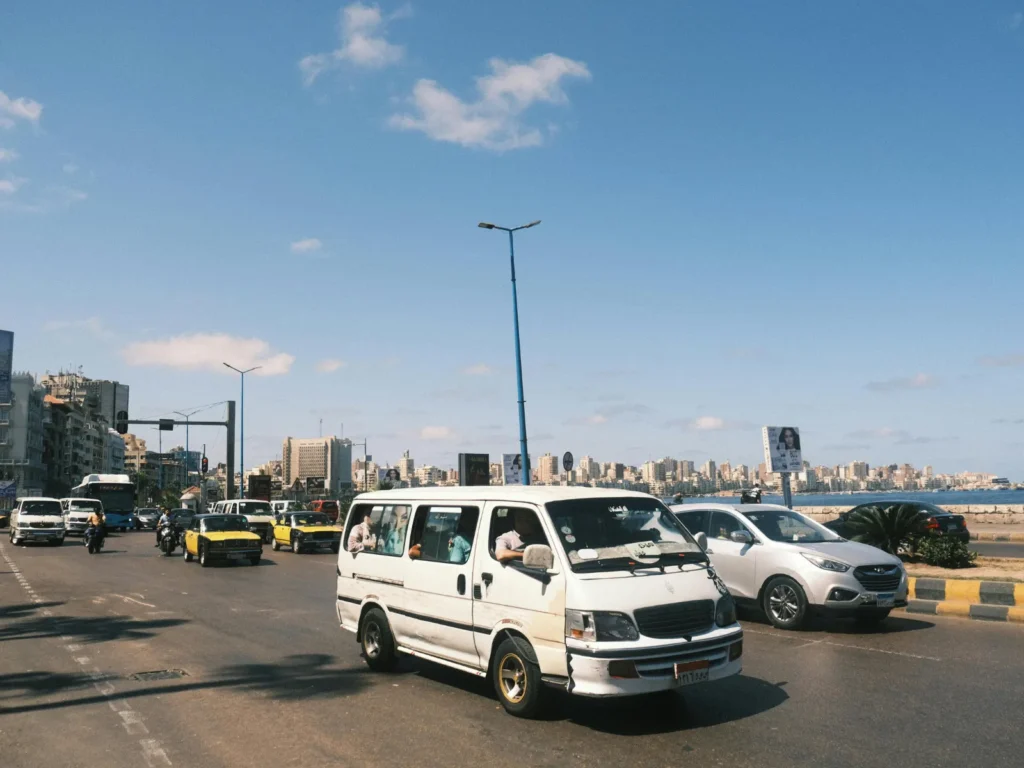
In 2026, the “White Taxi” is still around, but ride-hailing apps are the standard for international travelers.
- Uber & Careem: These apps are available in Cairo, Alexandria, Hurghada, and Mansoura. They provide upfront pricing and GPS tracking, eliminating the need for haggling.
- Private Drivers: For day trips to Saqqara, Dendera, or Abu Simbel, hiring a private car with a driver is the best option.
- Cost: A full-day private car in Cairo or Luxor typically costs between $60 and $90 USD.
- The Ring Road BRT: The newly operational Bus Rapid Transit (BRT) on the Cairo Ring Road offers a fast, bus-only lane that bypasses the infamous traffic jams.
5. Ferries and Feluccas: The Scenic Route
While mostly for leisure, river transport remains a functional part of transportation in Egypt.
- Nile Ferries: In Cairo, the Nile Taxi offers a fast-ferry service between Maadi, Downtown, and Zamalek.
- The Felucca: In Aswan and Luxor, these traditional sailing boats are the only way to reach island temples and Nubian villages.
FAQ: Getting Around Egypt in 2026
Q: Can I rent a car and drive myself in Egypt?
A: While international rental agencies exist at airports, I do not recommend driving yourself in Cairo. The traffic is highly intuitive and informal. However, self-driving on the modern highways between Cairo and the Red Sea is much more feasible in 2026.
Q: Is the Cairo Metro safe for solo female travelers?
A: Yes. The Cairo Metro (Lines 1, 2, and 3) is very efficient and features dedicated women-only carriages in the middle of every train, clearly marked with green signs.
Q: How do I get from Cairo Airport to Giza in 2026?
A: The best way is to book an Uber or a pre-arranged private transfer. The drive takes about 60–90 minutes depending on traffic. The new monorail/metro links are also expanding options for 2026.
Q: Do I need to book train tickets in advance?
A: Yes. For sleeper trains and VIP seated trains, you should book at least 7–10 days in advance, especially during the peak winter season (October–April).
Q: Is there a high-speed train to the Pyramids?
A: The West Nile Monorail and the Metro Line 4 (currently in final phases) are the primary rail links to the Giza Plateau and the Grand Egyptian Museum.
Conclusion: Navigation with Confidence
The landscape of transportation in Egypt has finally caught up with its monumental history. Whether you choose the futuristic glide of the monorail or the timeless drift of a felucca, moving through the land of the Pharaohs in 2026 is an adventure in itself. By mixing private transfers for comfort and domestic flights for speed, you can spend less time in transit and more time standing in the presence of greatness.

