 blog
blogAncient Egypt Religion Symbols: The Meaning Behind the Most Iconic Temple Imagery
Some journeys feel like sightseeing. Others feel like stepping into a living story—one told in stone, color, and ritual. If you’ve ever wondered why ancient egypt religion symbols appear again and again across temple walls, tomb ceilings, and carved doorways, you’re in the right place. In this guide, we’ll decode the meanings behind the most iconic temple imagery—so when you visit Egypt, you won’t just see art. You’ll understand the message behind it.
And once the symbolism clicks, the whole experience becomes richer—especially on a Nile cruise, where temples and tombs unfold day by day along the river that shaped Egyptian spirituality. If you want a trip designed around comfort and cultural depth, explore A Nile Cruise That’s Built for Comfort, Culture & Value.
Why ancient Egypt religion symbols still matter
Ancient Egyptian religion wasn’t abstract—it was practical, visual, and everywhere. Symbols guided how people understood the cosmos, honored the gods, protected themselves in the afterlife, and celebrated the daily rhythm of life. Temples were not just buildings; they were spiritual machines. Their imagery taught visitors where to look, what to believe, and how the divine order worked.
The foundation symbol: The Eye of Horus
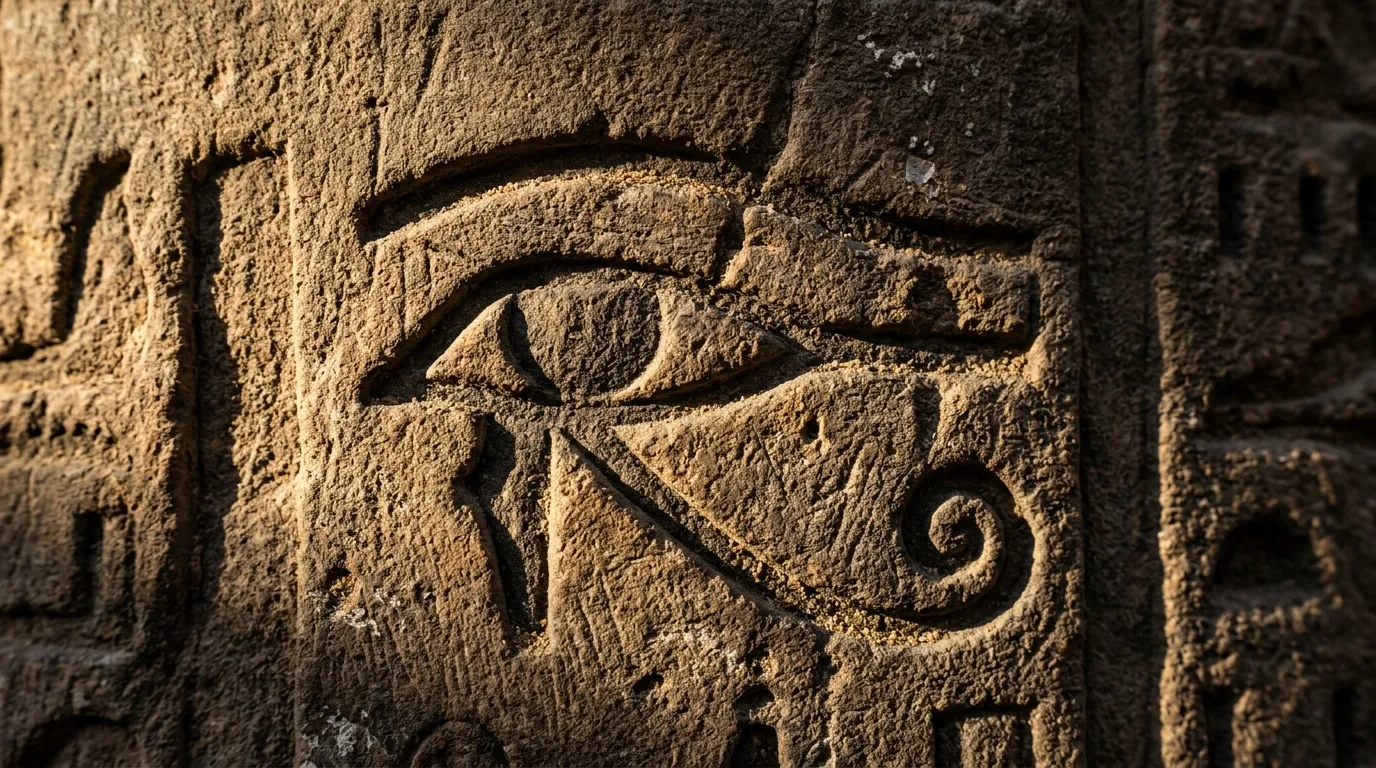
One of the most recognizable ancient Egyptian religion symbols is the Eye of Horus. Often shown as an eye with stylized markings, it represents protection, healing, and royal power. In many contexts, it also reflects restoration—an idea rooted in the mythic recovery of Horus after injury.
When you spot the Eye of Horus on temple walls or in decorative fragments, think of it as a spiritual safeguard. It’s not merely decorative; it’s a promise that harm can be warded off and wellbeing can be restored.
Temple power icon: The Ankh (life)
The ankh, often called the “key of life,” looks like a looped cross. It symbolizes eternal life and divine life-force. In Egyptian art, gods may hold the ankh to the pharaoh, indicating that life and legitimacy come from the divine.
On temple imagery, the ankh reinforces a core belief: death is not the end. Instead, life continues in another form—provided the soul is guided and protected by the right rituals and divine forces.
Guiding the spirit: The Djed pillar
The djed pillar appears as a column-like symbol, frequently linked to stability and endurance. It’s associated with the god Ptah and often connected to the rejuvenation of order in the world.
For viewers, the djed is a visual reminder that stability—spiritual and societal—must be maintained. The imagery suggests that beneath the surface of chaos, there is a structure that renews itself.
Divine knowledge: The Scarab
The scarab (often depicted as the beetle) symbolizes renewal, transformation, and the cycle of rebirth. The Egyptians observed the beetle’s behavior and linked it to the sun’s daily journey.
In temple contexts, scarab imagery can connect to regeneration and the promise of renewed life—particularly meaningful when you’re also seeing tomb art designed to support the afterlife.
Most iconic animal symbols: Gods in animal form
Ancient Egyptian temple imagery frequently merges deities with animal forms, turning symbolism into a language everyone could read.
- Hawk (Horus): celestial vision, protection, and kingship.
- Cobra (Wadjet): royal authority and protective power.
- Cow (Hathor): nourishment, love, and the beauty of sacred music.
- Jackal (Anubis): mummification, guidance, and safeguarding the dead.
Seeing these forms isn’t just about identifying creatures. It’s about recognizing the role each deity played—protecting the living, judging the afterlife, and sustaining cosmic balance.
Temple life and balance: Ma’at
At the heart of Egyptian religion symbols is Ma’at—the concept of truth, balance, and cosmic order. Ma’at wasn’t only a philosophical idea; it was portrayed in visual form, often connected to a feather motif.
In a temple, the symbolism of Ma’at points to a question visitors were meant to consider: How does your life align with order? It’s a reminder that Egyptian religion emphasized living in harmony with a divine system.
Decoding the “message layer” on temple walls
Temple imagery wasn’t meant to be decoded quickly—it rewarded attention. Even small details—like the direction a figure faces, the placement of symbols, and repeated motifs—can change the meaning.
If you want to understand what you’ll see while you travel, begin with this resource: Ancient Egyptian Symbol Guide for Travelers: Understand What You’ll See. Then take it one step further with Ancient Egypt Signs: Decode Temple & Tomb Highlights on Your Nile Cruise. Together, they help you read temple art like a storybook.
Practical inspiration: Make your cruise symbolism-focused
When your itinerary is designed for smooth pacing, you can actually absorb what the carvings are saying. If you’re comparing travel options, you might ask: Are There Nile Cruise Packages from Luxor? Get the Best Deals (and What’s Included). Choosing a package can help ensure you spend time where it matters—temples, guided visits, and the moments when Egypt’s sacred symbols come alive.
And if you want a more intimate style of travel, consider Assouan Dahabiya Nile Cruise: The Intimate Way to See Egypt in Style. For travelers who care about comfort and selecting the best match, Assouan Dahabiya: Choose the Right Boat for Your Perfect Nile Escape helps you plan with confidence.
If you prefer a premium yet relaxed atmosphere, Amoura Dahabiya Nile Cruise: A Premium, Laid-Back Experience on the Water is a strong fit. Or for an effortless, well-timed journey built around convenience, check A Sarah Nile Cruise: Your Effortless Egypt Journey (Tours, Transfers & Timing). Couples and families often love the smooth experience highlighted in A Sara Nile Cruise: Why Couples & Families Love This Smooth Nile Experience.
Start with the meaning, then watch Egypt transform
Once you understand ancient egypt religion symbols, Egypt becomes more than a set of famous monuments. It becomes a guided conversation between the living and the divine—rendered in icons you can recognize and meanings you can feel.
If you want even deeper context right alongside your visit planning, this topic is a perfect anchor: Ancient Egypt Religion Symbols: The Meaning Behind the Most Iconic Temple Imagery. Save it for before your trip, then revisit it while you’re standing in front of the same motifs on temple walls.
Your next step
Choose a Nile cruise that gives you time to look closely, then take these symbols with you. When you finally spot the ankh, the Eye of Horus, the djed, and the scarab in their original sacred contexts, you’ll realize the biggest wonder isn’t only how the art was made—it’s why it was meant to last.


